
Two Anxious Attachment Styles Dating: A Guide to Thriving Together
Have you ever been in a relationship that felt like coming home and walking into a hurricane all at once?
That’s often the signature experience when two people with anxious attachment styles get together. The initial connection can be electric. You feel seen, understood, and deeply connected. Finally, you’ve found someone who gets it—someone who craves closeness just as much as you do.
The Intense Pull Of An Anxious-Anxious Relationship
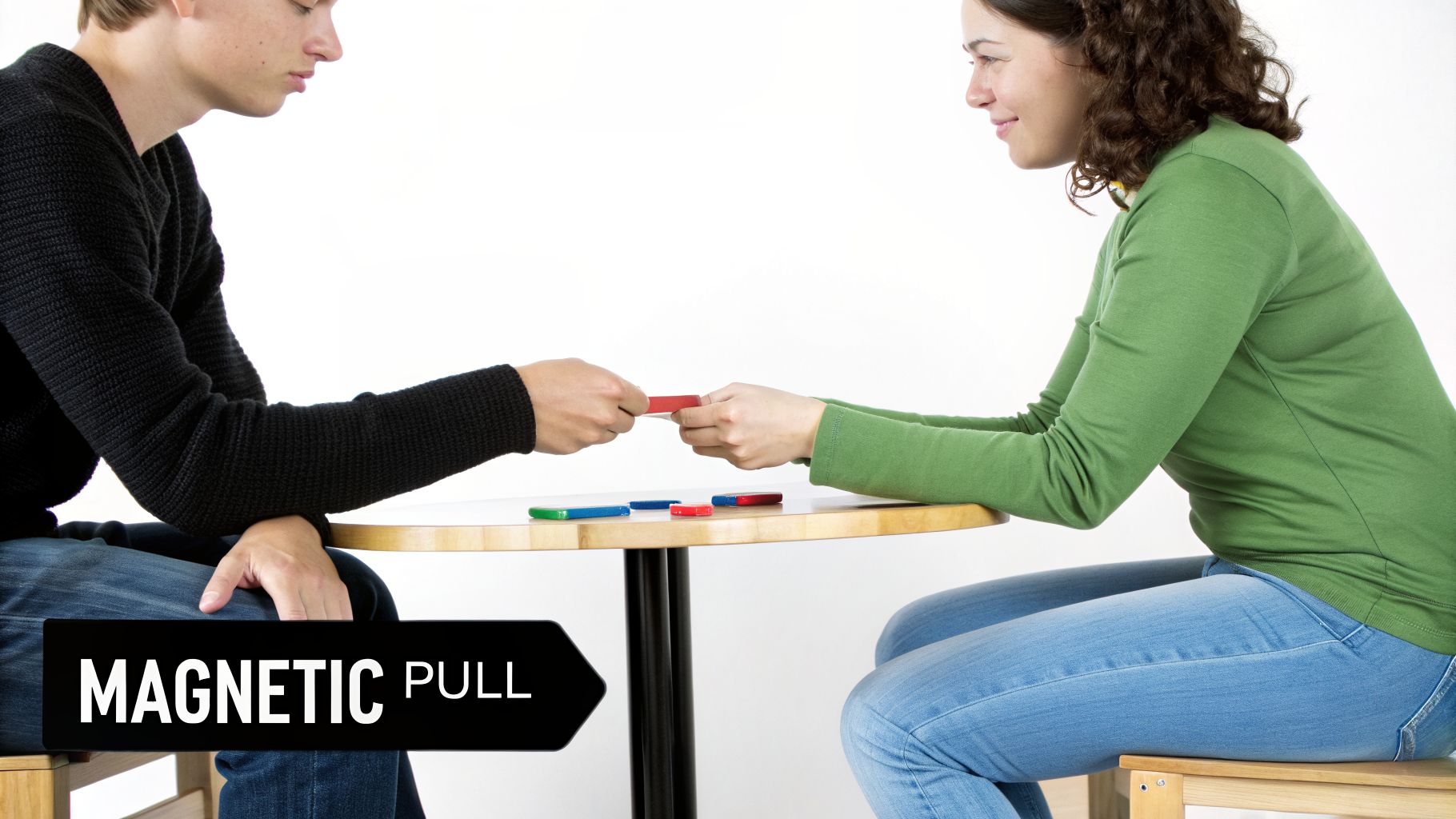
I often tell my clients to think of it like two powerful magnets. When you first meet, the attraction is immediate and undeniable because you’re both moving toward each other with the same intensity. This is driven by a shared, often subconscious, hunger for security and validation.
It feels incredible because your anxieties are mirrored in the other person, creating a powerful sense of belonging. The problem? You're bonding over a shared wound, not a shared sense of security.
From Magnetic Pull To Emotional Storm
This same magnetic force is exactly what makes the dynamic so volatile. Both partners are carrying a deep-seated fear of abandonment, a pattern that’s almost always rooted in childhood.
Because both of you are hyper-vigilant to any sign of distance, even a small shift—a delayed text message, a change in tone—can trigger a full-blown panic response in both people at the same time.
Instead of one person being a calm anchor, you have two people in a boat, each rocking it in fear that the other is about to jump overboard. This creates a feedback loop of anxiety.
This is a pattern I see so often. You’re both desperate for reassurance, but your attempts to get it (what we call protest behavior) only end up triggering the other person’s fear, which then triggers yours all over again. It’s an exhausting and painful cycle.
The anxious-anxious relationship is built on this very push-and-pull, a constant swing between intoxicating highs and gut-wrenching lows. Seeing this cycle for what it is becomes the first, crucial step toward breaking it.
Here’s a breakdown of what those highs and lows actually look like in practice.
The Anxious-Anxious Dating Cycle Highs Vs Lows
| Phase | What It Feels Like (The Highs) | The Underlying Reality (The Lows) |
|---|---|---|
| Early Days | "I've finally found my soulmate who understands my need for closeness." | "I feel seen because their anxiety mirrors mine, not because we've built true security." |
| First Sign of Conflict | "We're so passionate. The makeup sessions are incredible and bring us closer." | "We create drama to test the connection and get a temporary high from resolving it." |
| Long-Term Pattern | "We are so deeply connected and intertwined; we do everything together." | "We have become co-dependent, and neither of us feels safe without constant reassurance." |
Recognizing these patterns is not about placing blame. It's about bringing awareness to the dance you’re both caught in, so you can finally learn some new steps.
Recognizing The Protest Polka In Your Relationship
When two people with an anxious attachment get together, they can get stuck in a frantic, confusing dance. It’s a pattern I see all the time in my coaching practice, and I call it the “Protest Polka.” It’s a memorable name for that painful, reactive cycle where one person’s attempt to get closer accidentally sets off the other person’s anxiety, creating a dizzying spiral of panic for both.
This isn't a conscious choice anyone makes; it's a deep-seated nervous system response kicking in. The "music" for this dance starts the second one person's core fear of abandonment gets triggered. This leads to what we call protest behaviors—actions that are really just desperate attempts to get a reaction and feel connected again, even if that reaction is a negative one.
Because both people are carrying the same core fear, they are uniquely sensitive to these behaviors. One person's protest ends up being the other person's biggest trigger, and before you know it, the dance has begun.
How A Simple Text Can Ignite The Whole Thing
Let's walk through a real-world example that I’m sure will feel familiar. We’ll use Alex and Jamie, who both lean anxious and have been dating for a few months.
- The Bid for Connection: Alex sends a sweet, simple text: "Thinking of you! Hope your day is going well. 😊" This is a pure and simple bid for connection, a way of reaching out for a little reassurance.
- The Perceived Threat: But Jamie is stuck in a stressful meeting and doesn't see the text for two hours. When they finally open their phone, they’re so drained they can't think of the "perfect" reply. Their own anxiety flares up, whispering, "Alex is going to be so upset I took this long."
- The First Protest: Meanwhile, Alex’s anxiety is through the roof. Two hours of silence can feel like an eternity when you're anxious. Their mind starts spinning a story: Jamie must be pulling away. I must have done something wrong. So Alex’s protest behavior starts. They send a follow-up text: "Is everything okay?"
- The Mirrored Protest: Jamie sees that second text and their own anxiety spikes. They feel pressured, cornered, and misunderstood. Instead of just explaining, their protest behavior is to withdraw, hoping to avoid a fight. They decide to wait until they feel calmer to reply, which of course, only makes things worse.
This painful escalation is the Protest Polka. Alex’s need for reassurance (sending more texts) makes Jamie feel suffocated, causing them to pull back. Jamie’s withdrawal then feels like a confirmation of Alex’s deepest fear—abandonment—which leads to even more frantic attempts to reconnect, like calling multiple times.
It's a painful feedback loop where both partners are desperately trying to feel safe, but their methods for achieving safety are the very things that make the other person feel deeply insecure.
The goal isn't to stop needing connection, but to start recognizing the dance steps for what they are. Once you can see the predictable, cyclical nature of the Protest Polka, you can finally choose to step off the dance floor and learn a new, more connected way to relate to each other. For more on this, please watch my video below.
Everyday Triggers That Fuel Relationship Anxiety
When two people with an anxious attachment style start dating, the relationship can feel like an emotional minefield. Seemingly innocent, everyday moments can trigger a wave of panic that feels completely out of proportion.
This isn't because you or your partner are "too sensitive" or "dramatic." It’s because your nervous systems are wired to scan for any and every sign of abandonment. Understanding what sets off this alarm is the first step to finally disarming it.
For an anxious couple, these common triggers aren't just minor bumps in the road; they feel like existential threats to the entire relationship. The anxious mind is a master storyteller, and its favorite genre is worst-case scenarios. This isn't a logical process—it's a deep-seated survival instinct kicking into high gear.
Decoding Common Anxious Triggers
Let's break down a few of these scenarios and what they sound like inside the anxious brain. Remember, this isn't about being irrational; it's about a nervous system screaming "danger!"
Shifts in Texting Habits: Your partner’s replies go from long paragraphs to short, one-word answers, or the time between texts gets longer. The anxious brain doesn’t think, "They must be busy." It immediately translates this to: "They're losing interest. I’m not a priority anymore."
A Partner Needing Solo Time: A simple request for an evening alone to decompress is almost never taken at face value. The internal story that starts playing is: "They're pulling away from me. They don’t want to be with me, and this is the beginning of the end."
Mentioning an Ex-Partner: Even if they share a completely neutral story about a past experience, it can feel like a direct threat. The anxious interpretation is instantaneous: "They're still thinking about their ex. I’ll never compare, and it’s only a matter of time before I’m replaced."
Socializing with New People: Your partner is heading to a work event or a party without you, and it ignites a fire of insecurity. The fear that takes over is: "They are definitely going to meet someone more interesting, more fun, and less anxious than I am."
Each of these interpretations activates a powerful, visceral fear response. This is the moment the anxious cycle gets set in motion.
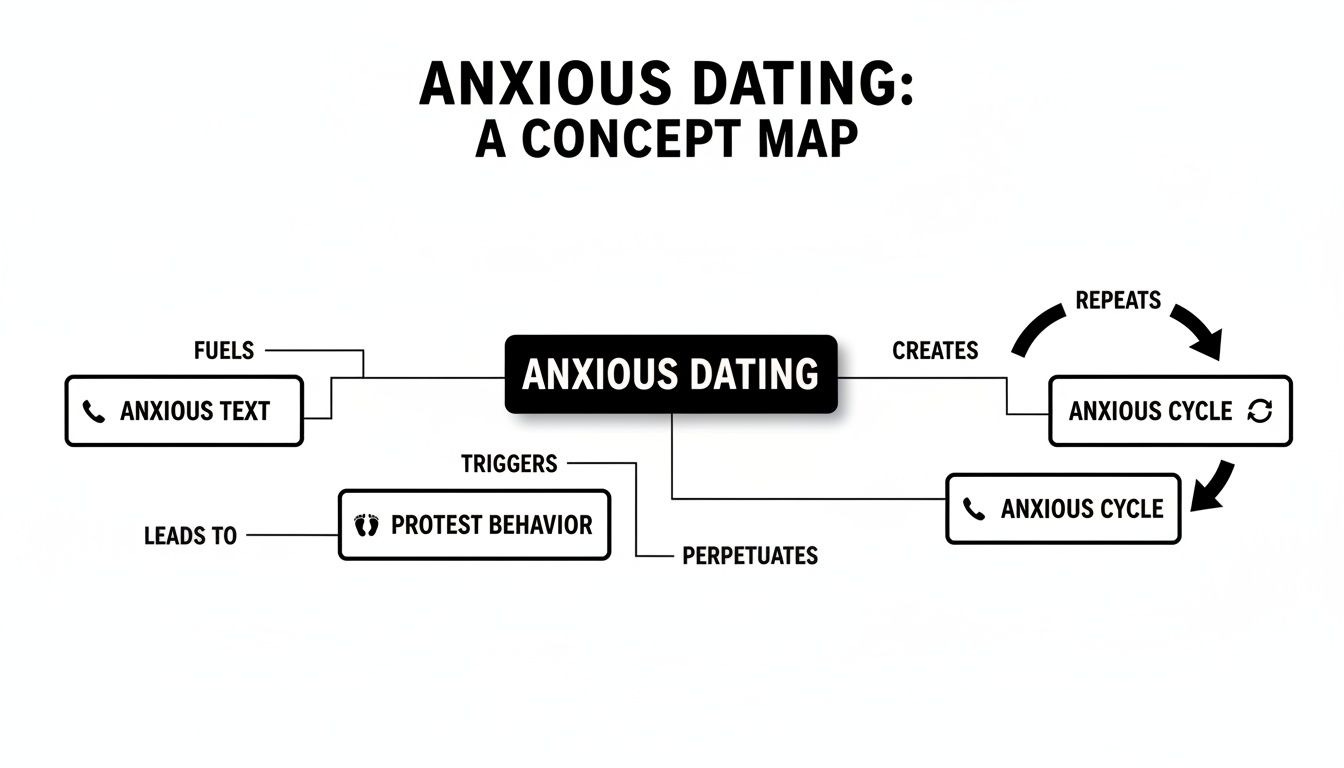
As you can see, a trigger (like an anxious text) can lead directly into protest behavior, which then feeds the cycle and keeps both of you trapped.
The core issue isn't the event itself, but the meaning your attachment system assigns to it. The trigger is simply the spark that lights the fuse of a pre-existing fear of abandonment.
Recognizing this pattern is the most powerful thing you can do. Seeing the trigger for what it is, decoding the story you're telling yourself, and noticing the panic rising in your body—this is where your power lies.
It creates a tiny, crucial pause. In that moment, you have a choice to respond differently instead of falling into the same old automatic reaction. This self-awareness doesn't just bring clarity; it brings compassion for yourself and your partner, replacing the panic with a real chance for connection.
How to Break the Cycle and Regulate Your Nervous System
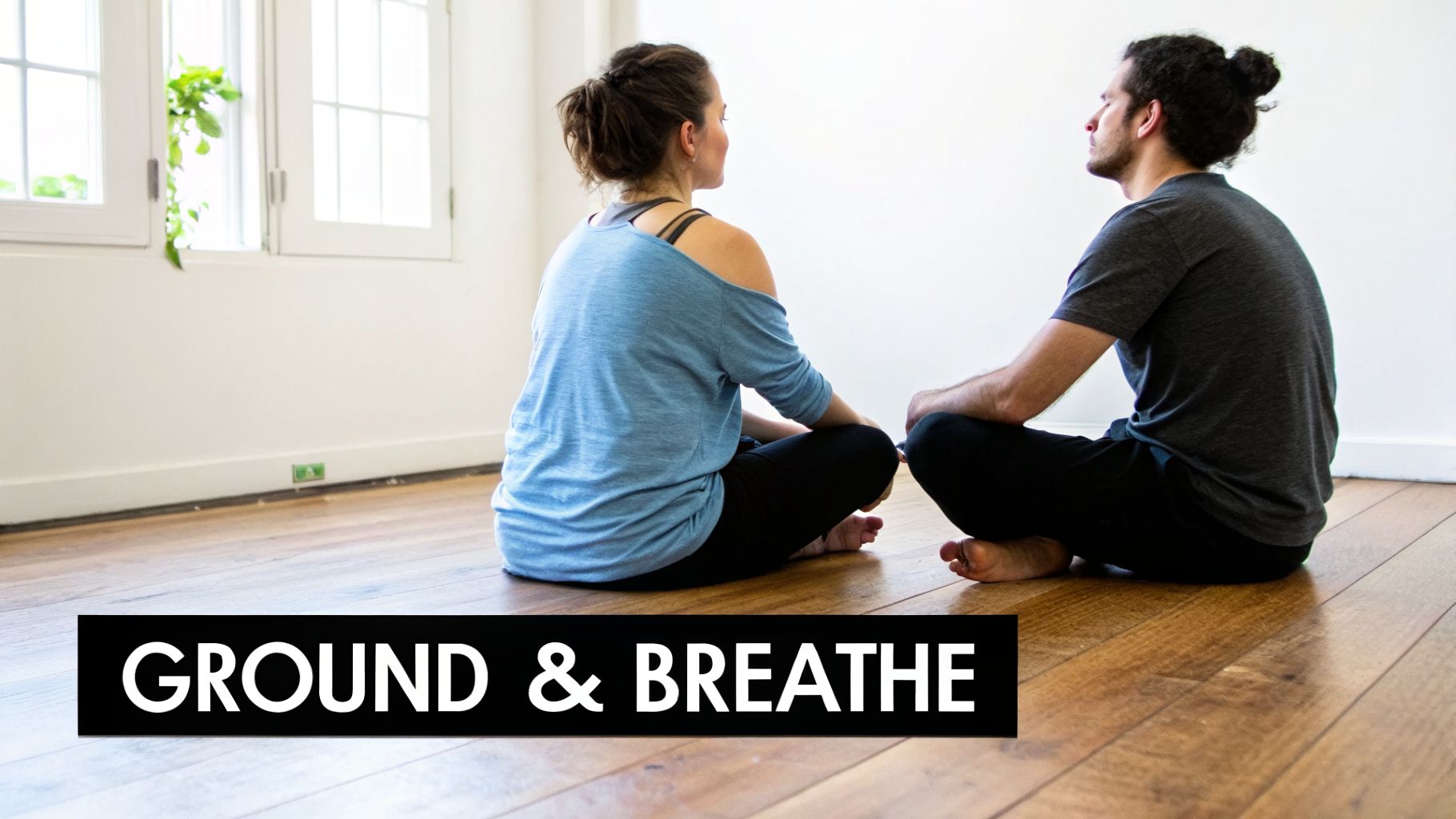
When you're spiraling, logic is the first thing to go. If you have an anxious attachment style, you know this feeling intimately—that gut-punch of panic where your entire being screams for reassurance. Now, imagine two people with this wiring dating each other. That panic is doubled.
Here’s the truth I tell my clients over and over: you cannot think your way out of attachment panic.
It's not a logical problem to be solved; it's a full-body experience. Your reaction is happening in your nervous system first. Trying to rationalize your way out of a dysregulated state is like trying to have a calm, quiet chat while a fire alarm is blaring in your ear. It’s just not going to work.
The first, and most important, step is to turn off that alarm.
Creating Space Through Your Body
This is where somatic (body-based) regulation becomes your absolute best friend. These aren’t complicated, woo-woo practices. They are simple, practical ways to calm your physical body down, which in turn creates the space you need to respond thoughtfully instead of reacting from a place of pure fear.
The moment you feel that familiar trigger, try one of these:
Grounding: Stop what you’re doing and bring all your attention to your feet on the floor. Seriously. Feel the texture of your socks, the temperature of the ground, the solidness beneath you. This tiny action sends a massive signal to your brain: “I am right here, right now. I am safe.”
Orienting: Slowly scan the room and, in your head, name five things you see. “There’s a blue lamp. There’s the wooden table. There’s a green plant.” This pulls your focus out of the terrifying story spinning in your mind and anchors you to the neutral, present reality of your surroundings.
These aren't just trendy mindfulness tricks. They are powerful tools that interrupt the panic cycle right where it starts—in your body. When you regulate your body, you give your mind a chance to catch up and choose a different path.
This is a biological reality. It’s why attachment anxiety feels so sticky and relentless. A major study found that attachment anxiety explained a staggering 60% of why anxiety and depression can follow someone from their teens into young adulthood. It’s all driven by that deep-seated need for approval and a constant worry about relationships.
When you’re dating, this can turn into a painful hyper-vigilance, constantly scanning for signs of rejection. But you can break this pattern by learning to soothe yourself first. For anyone committed to making this change, exploring self-help resources can provide some incredibly valuable perspectives for your growth.
These grounding exercises are the foundation. We dive into so many more in our guide on how to regulate your nervous system. Mastering these skills is the key. It’s how you stop the anxious-anxious dance and create a real, lasting possibility for a secure, loving connection.
How to Talk About It When You Both Feel Insecure
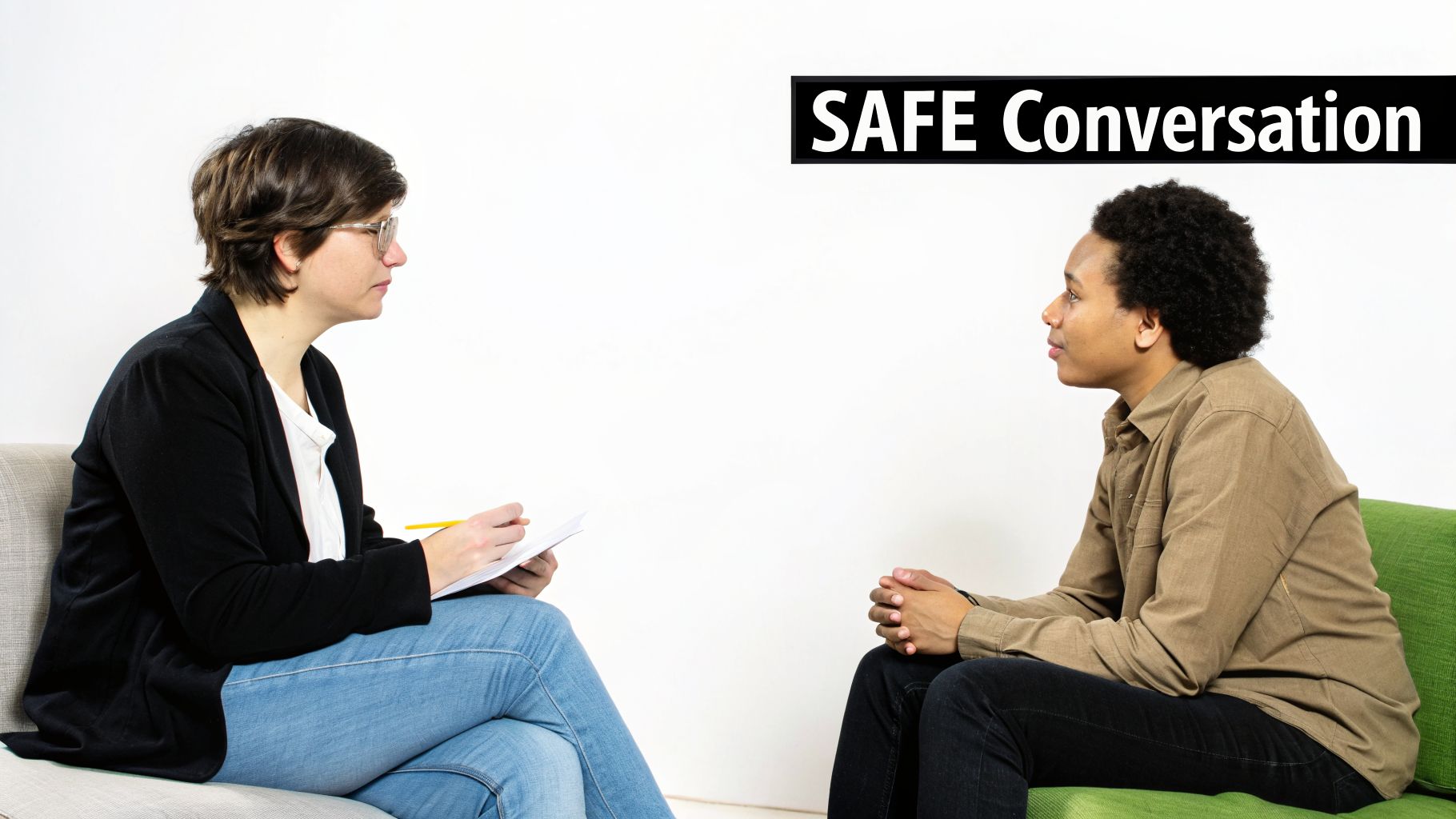
Okay, so you’ve managed to take a breath and calm your nervous system down from that initial wave of panic. That's a huge step. But now comes the really tricky part: how do you actually talk about what just happened?
When two people with anxious attachment styles come together, this moment is everything. One wrong move, one misplaced word, and you can light the fuse on the very anxiety you both just worked so hard to soothe.
Let’s be clear: this conversation isn’t about winning an argument or proving who was “right.” It’s about finding your way back to safety, together. Forget complicated communication rules. When you’re both feeling raw, you need a simple, blame-free path back to connection.
A Simple Framework for Reconnecting
This isn't just about using "I-statements." This is a concrete, step-by-step process to turn a moment of fear into a moment of repair. The goal isn't just to talk; it's to find each other again.
Connect Before You Speak. Before a single word is exchanged, just sit next to each other. Take three slow, deep breaths in unison. This tiny action does something powerful—it helps sync up your nervous systems and sends a clear, nonverbal message: "We're a team, even when this feels hard."
Share the Story, Not the Blame. This is where the real vulnerability comes in. You’re not accusing your partner; you’re gently sharing the scary story your anxious mind invented.
Ask for What You Need (In a Positive Way). This last part is crucial. You give your partner a clear, positive, and doable way to help you feel secure next time. You’re not just pointing out a problem; you’re co-creating a solution.
Let’s see how this plays out in a real conversation.
The point of talking after a trigger isn't to make sure it never happens again—that's impossible. It's about building trust that when it does happen, you have a reliable plan to repair the connection.
Example Script for the Partner Who Felt Triggered:
- (Share the Story): "When you went quiet after our disagreement, the story I started telling myself was that you were so upset you were rethinking our entire relationship, and that you were pulling away for good."
- (Ask for What You Need): "Next time you need some space to think things over, could you maybe say something like, 'I'm feeling overwhelmed and just need a few minutes, but I promise we will figure this out'?"
Example Script for the Partner Who Caused the Trigger:
- (Share the Story): "When you started texting more and more, I felt this wave of pressure. The story I told myself was that I could never give you enough reassurance and that I was bound to disappoint you."
- (Ask for What You Need): "In those moments, it would mean the world to me if you could trust that my love for you is steady, even when I'm busy or can't respond right away."
Learning to talk like this feels incredibly awkward at first. It's like learning a new language. But it is absolutely a skill you can build. Exploring proven strategies for improving relationship communication effectively can give you even more tools.
If these dynamics sound painfully familiar, you might also find our guide on overcoming poor communication skills in relationships useful. This kind of structured, honest communication is how you stop the cycle of panicked reactions and start building the deep, secure foundation you both truly crave.
Building an Earned Secure Future—Together
When two people with anxious attachment get together, it can feel both challenging and deeply hopeful. On one hand, you're both navigating the same deep-seated fears of abandonment. But on the other, you have a unique, built-in empathy for each other's ache for connection.
This shared ground is where the magic can happen. The journey ahead isn't about "fixing" each other. It’s about consciously and intentionally building the kind of safe, connected relationship you both have always craved.
This is what I call creating earned security. It’s the choice to actively build secure attachment patterns together, right here and now, regardless of what your childhood programming taught you. This kind of security doesn’t just show up one day; it’s built one small, consistent, and sometimes difficult choice at a time.
Committing to the Real Work of Growth
Shifting from a shared cycle of anxiety to a stable foundation of security is a marathon, not a sprint. It demands a long-term mindset. There will absolutely be moments when your old, familiar patterns flare up. That's not a sign of failure.
The real goal isn't to be perfect; it's to get good at repair.
Here are a few ways to commit to this long-term growth together:
- Create Your Own Rituals of Connection: This doesn't have to be complicated. It could be a simple five-minute check-in before bed, a non-negotiable weekly date night (even if it's just takeout on the couch), or starting every single morning with a real hug. These small, predictable moments become anchors for your nervous systems.
- Celebrate Your Wins—Especially After a Fight: When you successfully navigate a disagreement using your new tools and find your way back to each other, pause and acknowledge it. Say it out loud: "I am so proud of how we handled that." This is how you slowly rewire your brains to see that conflict can actually lead to more intimacy, not the abandonment you both fear.
The ultimate goal for a couple with two anxious attachment styles is to become each other’s safe harbor. It’s a conscious choice to turn toward each other with the tools of regulation and clear communication, building a future where security is something you create together, day by day.
Feeling stuck is not a sign that your relationship is doomed; it’s a sign that it’s time to reach for support. A powerful first step is understanding your own patterns. You can get more clarity by taking our free Attachment Style Quiz.
If you're ready for more personalized guidance, you can also book a complimentary 15-minute discovery call to explore how we can support you and your partner. And for a deeper look into this process, don't miss our article on how you can achieve earned secure attachment.
Your Questions, Answered
When you’re in a relationship where both people lean anxious, a lot of questions can bubble up. It's a unique dynamic, and it’s natural to wonder what you’re up against. Let’s dive into a few of the questions I get asked the most in my coaching practice.
Can a Relationship with Two Anxious Styles Actually Work?
Absolutely, but I want to be honest with you: it takes real, conscious work from both of you. The challenge here is that you’re both wired with the same core fear of abandonment, so it's incredibly easy to trigger each other.
But here’s the flip side: that shared vulnerability can become your greatest strength. It can be the source of a deep, almost telepathic empathy for what the other person is feeling.
Success comes down to both people committing to learn how to self-regulate their nervous systems first before reacting. It means learning to speak your needs clearly without blame and offering reassurance even when you feel scared yourself. When you both commit to this path, you can build an incredibly supportive, earned-secure bond together.
What if My Partner Isn’t Willing to Work on Their Attachment Style?
This is a tough one, and I hear it all the time. It can feel so lonely and frustrating. The truth is, you can’t change another person. You can’t make them go to therapy or read the book or do the work. You can only change yourself and how you show up.
So, what do you do? You focus on your own healing journey. Learn to soothe your own anxiety. Practice setting boundaries that honor your needs. Learn to communicate from a place of calm, grounded security. When you start doing this, the entire relationship dynamic will shift.
Your partner might see the change in you and get curious about their own patterns. Or, you might get clearer on what you truly need and realize the relationship isn't giving it to you. Either way, your sense of safety has to come from inside you, not from waiting for them to change.
Is It Just Easier for Anxious People to Date Someone Secure?
While dating a secure partner can feel like a breath of fresh air, it’s not a magic pill that will instantly heal your anxious attachment. Your triggers, your deep-seated anxieties, and your protest behaviors will still come out to play. A secure partner might handle them with more grace, but they can’t do the work for you.
The most important factor in any relationship’s success is the work you’re willing to do on yourself. Building your own internal sense of safety and learning how to communicate effectively are non-negotiable skills, no matter who you’re dating. A relationship between two anxious people can absolutely become one of the most secure, loving partnerships imaginable—if you have the right tools and are both willing to use them.
At Securely Loved, we believe healing is always possible. If you're ready to break free from these cycles and build the secure connection you deserve, start by taking our free Attachment Style Quiz.
You can also book a complimentary 15-minute discovery call with our team to talk through how we can support you on your journey.